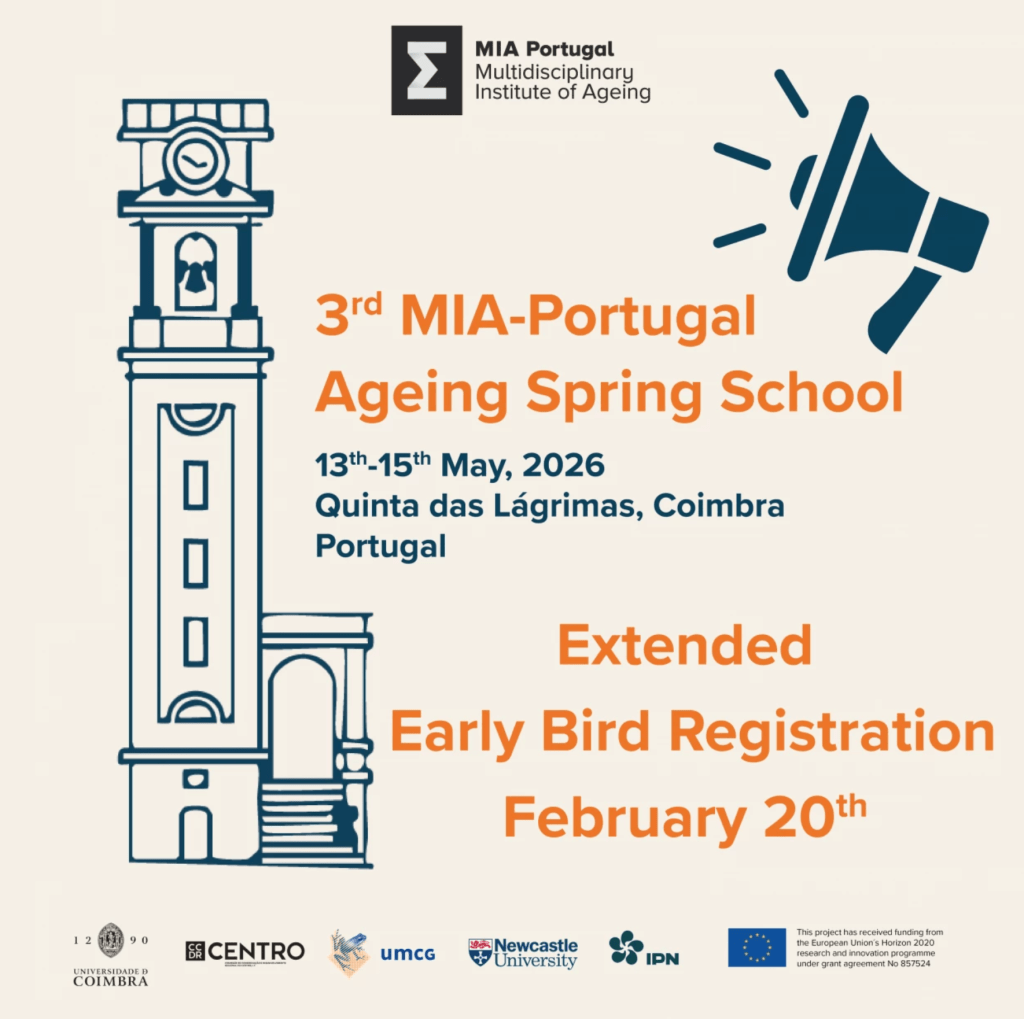
The 3rd MIA-Portugal Ageing Spring School is a two and half days international gathering that brings together emerging and established scientists who share a passion for ageing research.
Organized by the Multidisciplinary Institute for Ageing, the Ageing Spring School focuses on translating biological insights into strategies for promoting healthy ageing. This event is specifically designed for graduate students, early-career researchers, and group leaders working across a range of disciplines in the ageing field.
As we join the new Multidisciplinary Institute of Ageing (MIA) in University of Coimbra and expand our field of research, we update our lab’s name so it is both easy to remember (MARCO) and all-inclusive of our recent interests. Stay connected, we’ll be hiring and recruiting new researchers, technical assistant and graduate students very soon!
10 years ago today, at the 6th International Mutant p53 Workshop in Toronto, I showed clear evidence and proposed, for the first time, that p53 is not just a tumor suppressor, but that it is also a proto-oncogene (wild-type)! The p53 oncogene (mutated) was already well known but it was believed that, unlike all other oncogenes, the p53 oncogene originated directly from a tumor suppressor through neomorphic mutations (mutations by which the altered gene product would in theory acquire novel molecular functions). I showed evidence that wild-type p53 is a proto-oncogene already in its non-mutated state, with pro-oncogenic activity like any other proto-oncogene. These functions are likely to have evolved within the p53 locus in the mammalian genome for millions of years. I proposed that it is this product of evolution, this proto-oncogene, that becomes the over-activated (mutated) p53 oncogene in cancers, similarly to any other oncogene, and that we have to learn more about it so that we can target it to cure this disease. Part of our supporting data on the existence of a p53 proto-oncogene is now available via the servers at EMBO Reports, IJMS and BioRxiv (please consult the links below). MaRCO continues in its efforts to learn more about and to target this new proto-oncogene, which is likely the most mutated proto-oncogene in cancer. Contact areap53lab@gmail.com if you want to support our research.
Our research related to p53 proto-oncogene: 2016, 2022, 2023.
When the cell has a very important protein like Δ160p53 that can save its life under stress conditions, the cell wants to make sure the ribosome is not going to miss that start codon; so why not have two instead?
Read all the details in our new super exciting paper that is part of our also super exciting celebratory issue of the 40 years of p53 research. Click HERE!
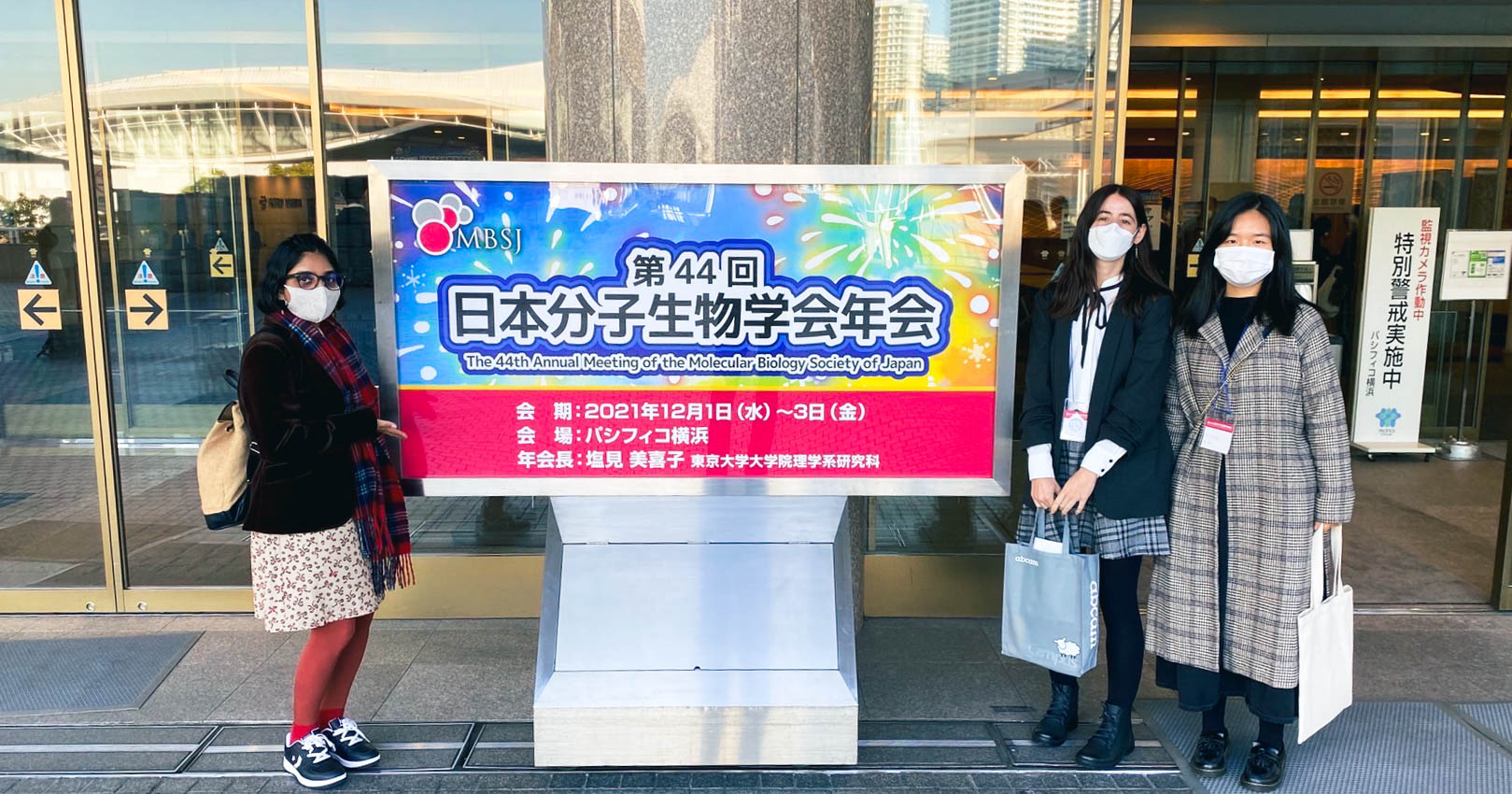
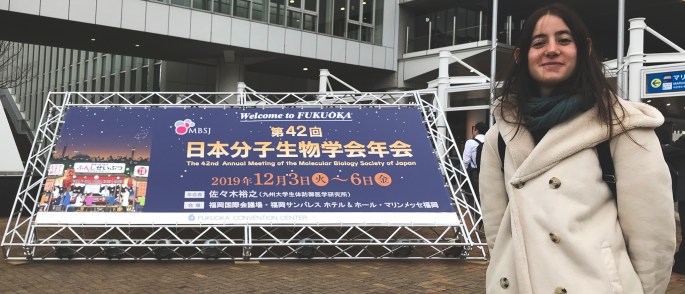
Two years after our first p53 workshop in Japan, we had the pleasure to organize our second p53 Workshop in Japan together with Rieko Ohki (National Cancer Center) and Kaori Fujita (Kyoto University). Thank you all for coming – we had a full room! We are very grateful to MBSJ2019 and our biggest thanks go to our speakers: Tomoo Iwakuma, Koji Itahana, Kiyoto Kamagata and Shinpei Yamaguchi.





 marco lab